
Church Newsletters: Finding the Right Balance Between Print and Digital
Church newsletters have long been a dependable way to communicate with members. Whether you mail publications to homes, hand them out on Sundays, or send them electronically, newsletters provide important ministry updates. Church newsletter announcements highlight upcoming events, keeping congregants of all ages connected to church life.
Today, more church leaders are asking if the way they communicate still serves their congregation well. With increased costs, new technology, and changing generational preferences, it’s important to consider which options meet people’s needs.
Rising postal rates and printing expenses have prompted many churches to reevaluate their newsletter format. The routine of printing and mailing monthly ministry updates now requires more budgeting and planning. Meanwhile, email newsletter tools, church websites, and social media platforms make it easy to send frequent updates quickly and affordably.
Church administrators want to be good stewards while caring for every person. The church office must cater to children, teens, young adults, adults, and seniors. The way you communicate shapes members’ sense of belonging and their understanding of what’s happening.
While considering whether to use printed church newsletters or digital church newsletters, you’re not choosing sides. You’re weighing pros and cons — and how each format fits into your church communication strategy.
The Benefits of Printed Church Newsletters
Printed newsletters, the reliable standby, still offer many benefits:
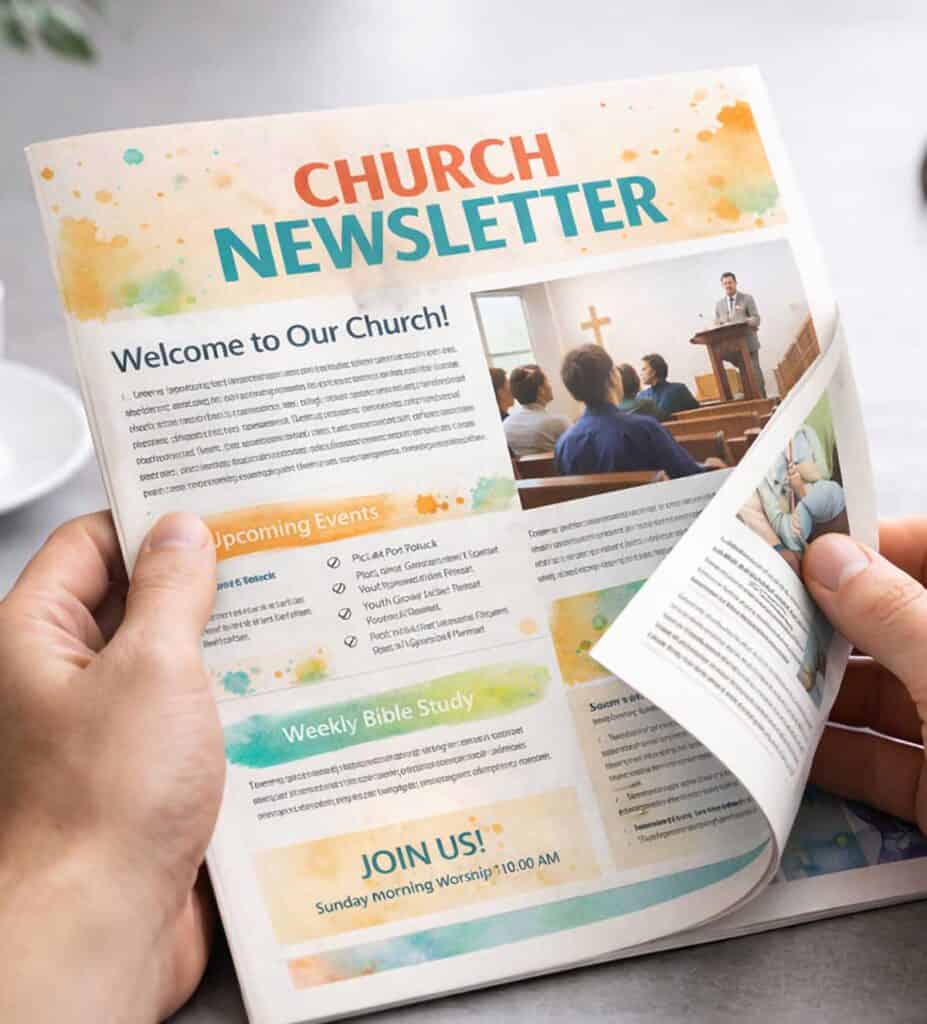
- They’re accessible. Church members who are less comfortable with technology appreciate receiving print publications by mail. This includes older adults, people without reliable internet access, and church members who dislike computers or email. Printed newsletters eliminate the barriers of passwords, inboxes, and links (which don’t always work).
- They’re tangible and personal. Many members appreciate holding physical pages. Paper encourages focused reading and better comprehension. That’s especially valuable for pastoral letters, devotions, and other inspirational messages. Members can read a print newsletter at the kitchen table, set it by a Bible, and revisit it often.
- They seem important and credible. When evaluating newsletter formats, consider perception. Because printed materials require planning and investment, they feel intentional and trustworthy. These days, most people are overwhelmed with emails and online notifications; as a result, print newsletters stand out and receive more attention.
- They are lasting and versatile. Recipients place physical newsletters on refrigerators and bulletin boards, where they serve as visual reminders of upcoming events, prayer requests, and church announcements. Digital messages disappear, while printed church newsletters remain visible and accessible.
- They have great reach. After physical newsletters are delivered, spouses, children, caregivers, and guests also can peruse the pages. Some people share print newsletters or articles with friends, neighbors, and extended family members. Print communication extends the church’s presence into the community and beyond. The church calendar, event announcements, and devotions about God’s Word all serve as outreach.
Some Challenges of Printed Church Newsletters
Church leaders also must weigh these drawbacks of printed newsletters:
- They cost more. Expense is the main disadvantage, due to the rising costs of paper, printing, and postage. For churches with tight budgets or large mailing lists, those expenses might compete with funding for ministries, missions, or staff support.
- They take time to produce and are less timely. With the production process, editorial planning and design skills are required. Church office staff or volunteers must write, edit, layout, print, and distribute newsletter content — often weeks before it reaches mailboxes. That longer timeline makes a monthly newsletter less effective for time-sensitive updates, such as urgent prayer needs, a last-minute church event announcement, and a Bible study or small group notification.
- They’re less flexible. After you send or distribute a printed newsletter, you can’t change it or correct errors. Careful proofreading reduces mistakes, but print’s inflexibility is still limiting.
The Benefits of Digital Church Newsletters
Digital newsletters offer lots of strengths:
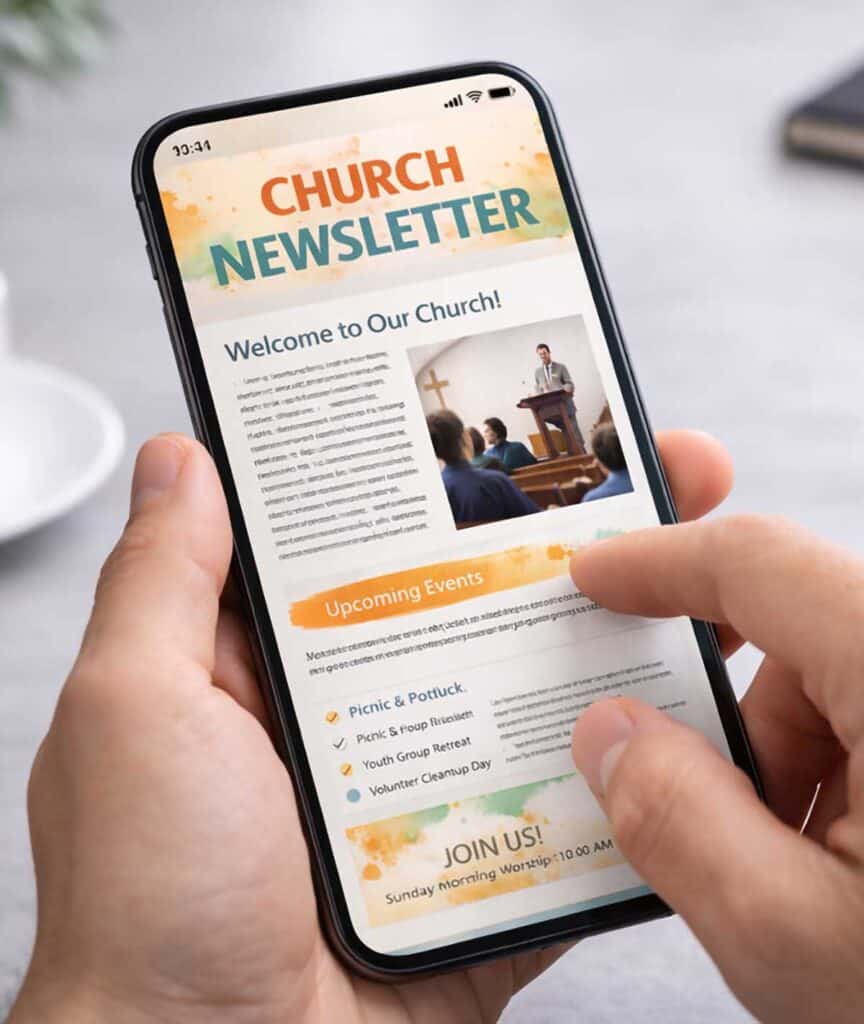
- They save money. Without printing and postage costs, churches can share updates with large groups. Digital publications free up funds for ministry projects and community care.
- They are immediate and flexible. Leaders can deliver church announcements, weekly updates, and reminders quickly. The same goes for revisions and corrections. The flexibility of a weekly newsletter is especially important for congregations that have busy calendars filled with church activities.
- They boost engagement. With a digital format, you can include links to event registrations, volunteer sign-ups, sermon videos, online giving, and downloadable faith resources. Readers can respond immediately, rather than trying to remember details until Sunday.
- Digital communications are familiar. For younger members and busy families, digital newsletters fit their daily routines. People can read emails on a phone or device and then save and search them later. Because digital newsletters are available 24/7, they’re super-convenient.
Some Challenges of Digital Church Newsletters
Digital newsletters have limitations too:
- They contribute to email overload. Many members of your church community receive dozens of messages daily, so they might overlook church newsletters. When important updates get buried, congregants miss out.
- Technology barriers exist. Not all people use email regularly, and some aren’t fans of digital communication. When a church leader relies exclusively on virtual newsletters, some members feel excluded.
- Digital content is easier to forget. After someone skims a church email newsletter, newer messages push it aside. Without that physical reminder, all those event details, deadlines, and ministry opportunities fade from view.
The Blended Solution
Many churches use print and digital newsletters, plus social media. That strategy lets you address diverse needs while using resources responsibly.
Some churches mail printed newsletters only to members who request them. Others provide printed copies at church while sending weekly updates via email. You might use e-newsletters for frequent announcements and reminders, reserving print newsletters for less-timely church communication.
If possible, offer people a choice. Let church members opt for print or digital church newsletters (or both).
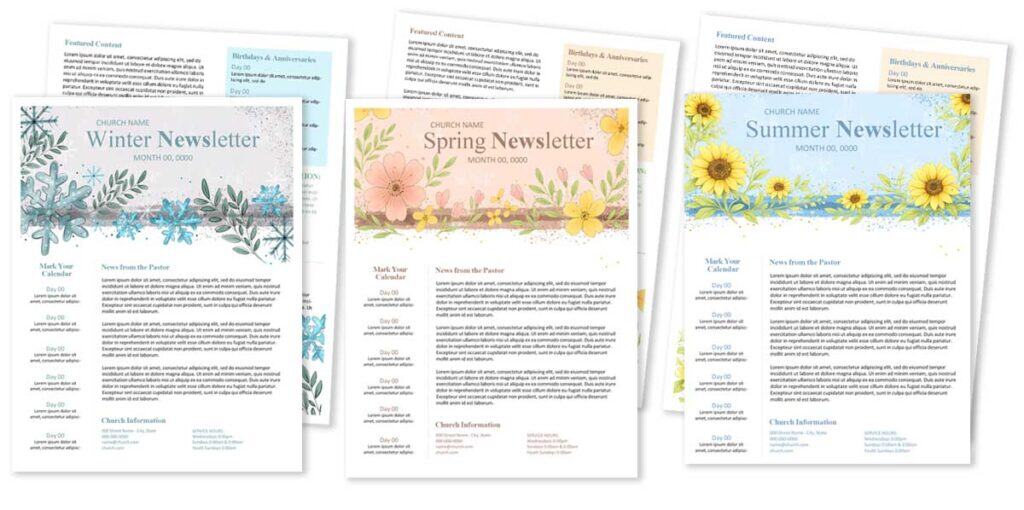
Pro Tip: For both print and digital formats, a church newsletter template saves loads of time. Well-designed newsletter templates — like those available from ChurchArt Online — help with creativity and consistency.
Connection Matters More Than Newsletter Format
Regardless of format, church newsletters keep all generations connected to Jesus Christ and to their church family. With the content ideas that fill newsletters, members stay informed and engaged in meaningful ways. Church publications also boost ministry participation, build community, and help people feel included in the Holy Spirit’s work.
When you focus on connections, formatting decisions become clear. By keeping the newsletter accessible, church leaders strengthen relationships and ministry support. Effective church communication isn’t just about technology and finance. It’s about caring for and serving people.
ChurchArt Team
We love art, are passionate about helping churches create professional-looking communications and are a fun bunch of folks. With an in-tune creative director and a rock-solid team of artists, we will provide the art you’ll want to use, plus templates, puzzles and extras that make your job easier.
Share This Post:

All the church-specific art you need IN ONE PLACE.